
Board game night can mean cozy cooperation, ruthless strategy, or twenty minutes spent finding one missing piece. I sorted these names for casual groups, serious clubs, family nights, cafés, chats, and friends who read rules only after the argument starts.
Best board game group names
These names work for groups that rotate among many games and genres. I would start here when the table wants an evergreen identity that will not look odd after somebody brings a new box next week.
- The Game Table
- The Board Meeting
- The Tabletop Circle
- The Game Night Crew
- The Box Top Society
- The Turn Takers
- The Meeple People
- The Rulebook Club
- The Victory Point Friends
- The Cardboard Collective
- The Weekly Game
- The Player Board
- The Game Shelf Society
- The Table Is Set
- The Final Round
Funny board game names
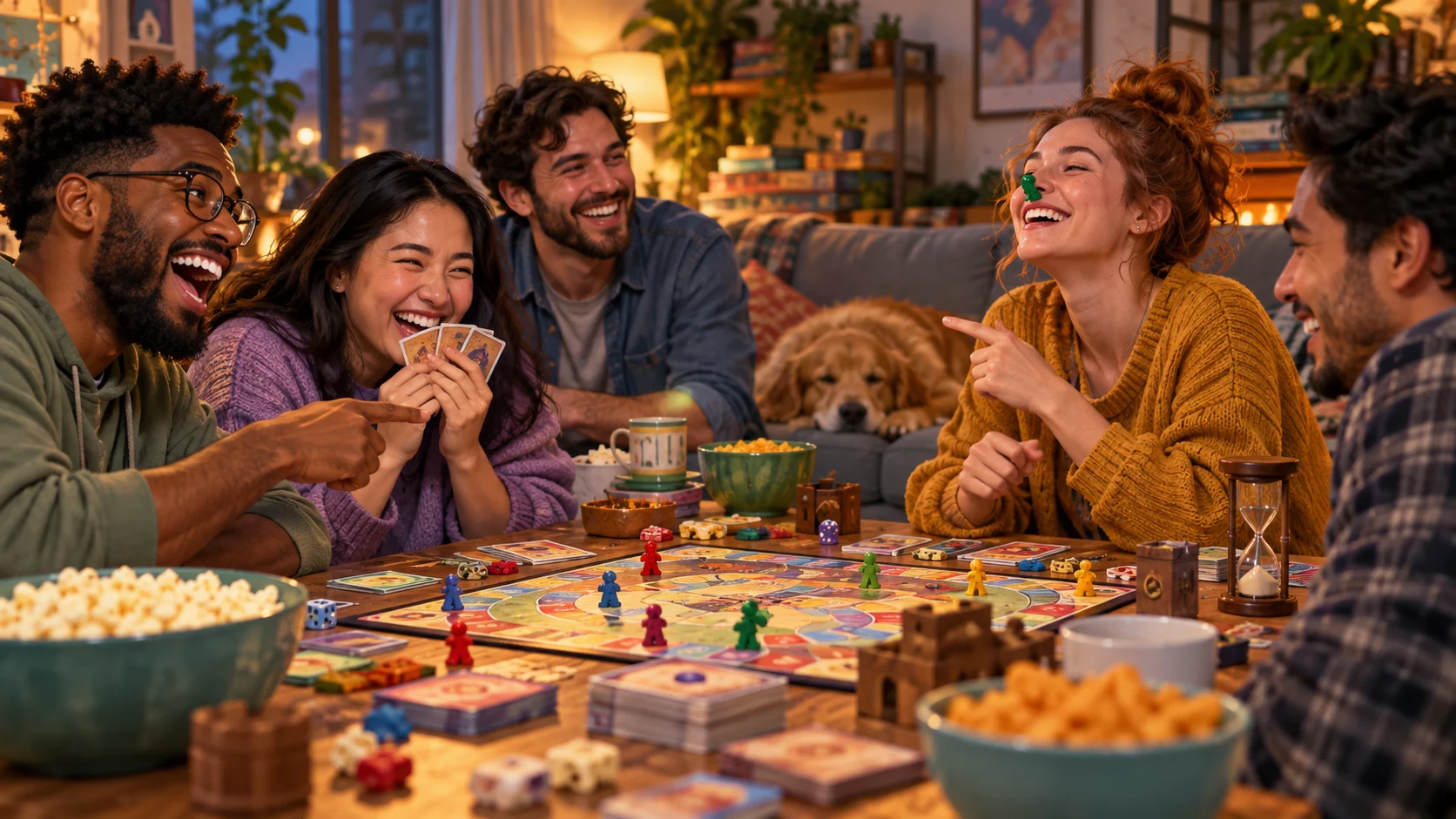
Board game humor begins during setup, peaks when the rules disagreement arrives, and ends when nobody can make the components fit back into the insert. These names honor that complete emotional journey.
- The Rulebook Lawyers
- Board to Be Wild
- The Setup Committee
- The Missing Piece Department
- The Analysis Paralysis Club
- The Table Flippers, Figuratively
- The Victory Point Accountants
- The Snack Phase
- The House Rule Historians
- The One More Round Group
- The Component Counters
- The First Player Problem
- The Box Will Never Close
- The Unread Instructions
- The Friendly Rivalry Bureau
Clever tabletop group names
Tabletop language can sound clever without attaching the group to a specific title. Turns, player aids, game states, drafts, scoring tracks, and hidden information create an identity regular players recognize.
- The Turn Order
- The Hidden Information Society
- The Open Hand Club
- The Resource Managers
- The Action Selection Team
- The Player Aid People
- The Shared Board
- The Table Presence
- The Game State Group
- The Card Draft Circle
- The Dice Allocation
- The Endgame Trigger
- The Setup and Strategy Society
- The Scoring Track
- The Table Talkers
Strategy game club names
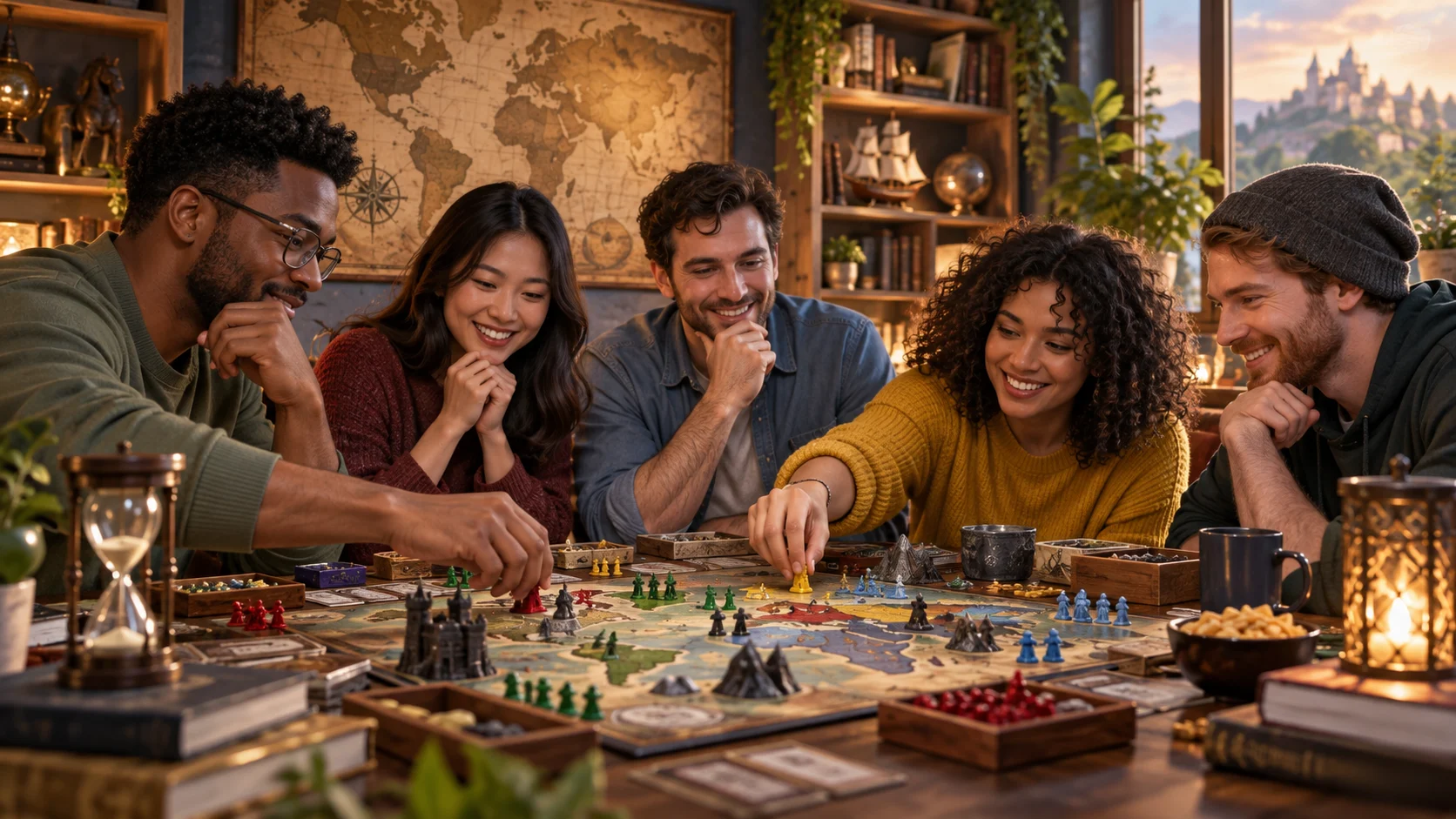
Strategy clubs may prefer names built around planning, systems, maps, resources, and long-term decisions. These fit heavier game groups without claiming that a three-hour playtime is a personality virtue.
- The Long Game
- The Strategic Table
- The Planning Phase
- The Engine Builders
- The Area Control Council
- The Worker Placement Office
- The Tactical Turns
- The Decision Tree
- The Resource Conversion Club
- The Map and Marker Society
- The Heavy Game Group
- The Economic Engine
- The Victory Condition
- The Calculated Move
- The Strategy Shelf
Cooperative game group names
Cooperative games ask players to win or lose together against the game's system or scenario. These names emphasize shared goals and communication, although they cannot prevent one friend from trying to make every decision.
- The Shared Objective
- The Co-op Crew
- The Common Goal Club
- The Table United
- The Team Turn
- The Collective Victory
- The Scenario Squad
- The Puzzle Partners
- The Shared Hand
- The Mission Table
- The Against-the-Board Alliance
- The Communication Crew
- The One Team Game
- The Group Decision
- The Win Together Society
Family board game night names
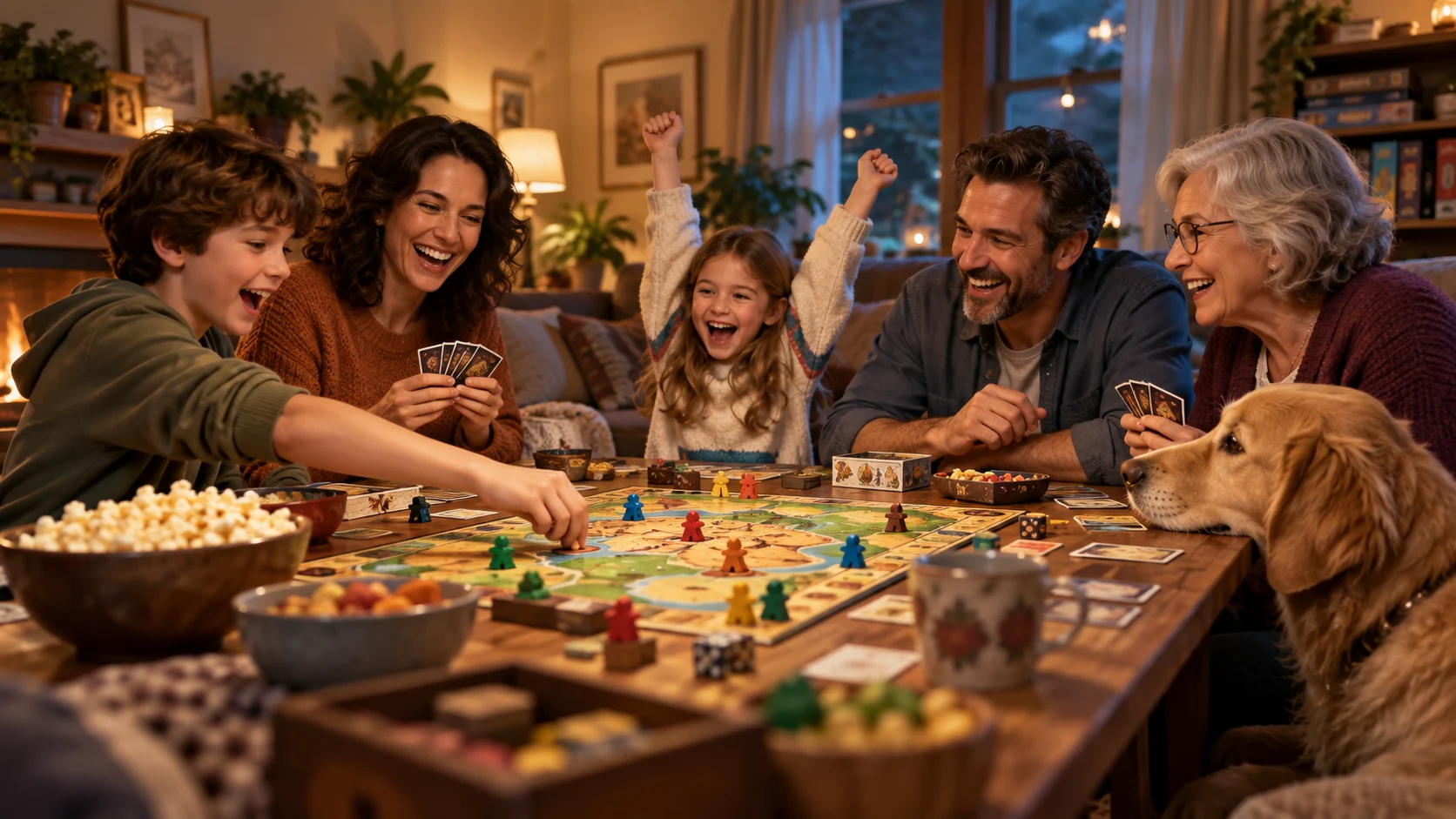
Family game nights need a name that includes different ages, relationships, attention spans, and skill levels. These focus on home, food, shared time, and friendly competition rather than one person's win record.
- The Family Game Table
- The Friday Night Players
- The Kitchen Table Crew
- The Household Turn
- The Family Scoreboard
- The All-Ages Game
- The Cousin Competition
- The Parent-Kid Players
- The Sunday Game Shelf
- The Home Team Table
- The Generational Gamers
- The Family Rulebook
- The After-Dinner Round
- The Living Room League
- The Friendly Family Rivalry
Board game group chat names
The group chat chooses dates, hosts, player counts, snacks, titles, and expansions. A practical name is easier to find when four people are asking what time setup actually begins.
- Game Night at Seven
- Who's Bringing Games
- The Table Is Ready
- The Board Game Thread
- The Player Count
- The Game Vote
- The Snack Sign-Up
- The Host Rotation
- The Rules Question Chat
- The Open Seat Alert
- The Weekly Game Calendar
- The Expansion Discussion
- The Setup Time Group
- The Last Round, Allegedly
- The Game Shelf Hotline
Names for cafés, meetups, and public clubs
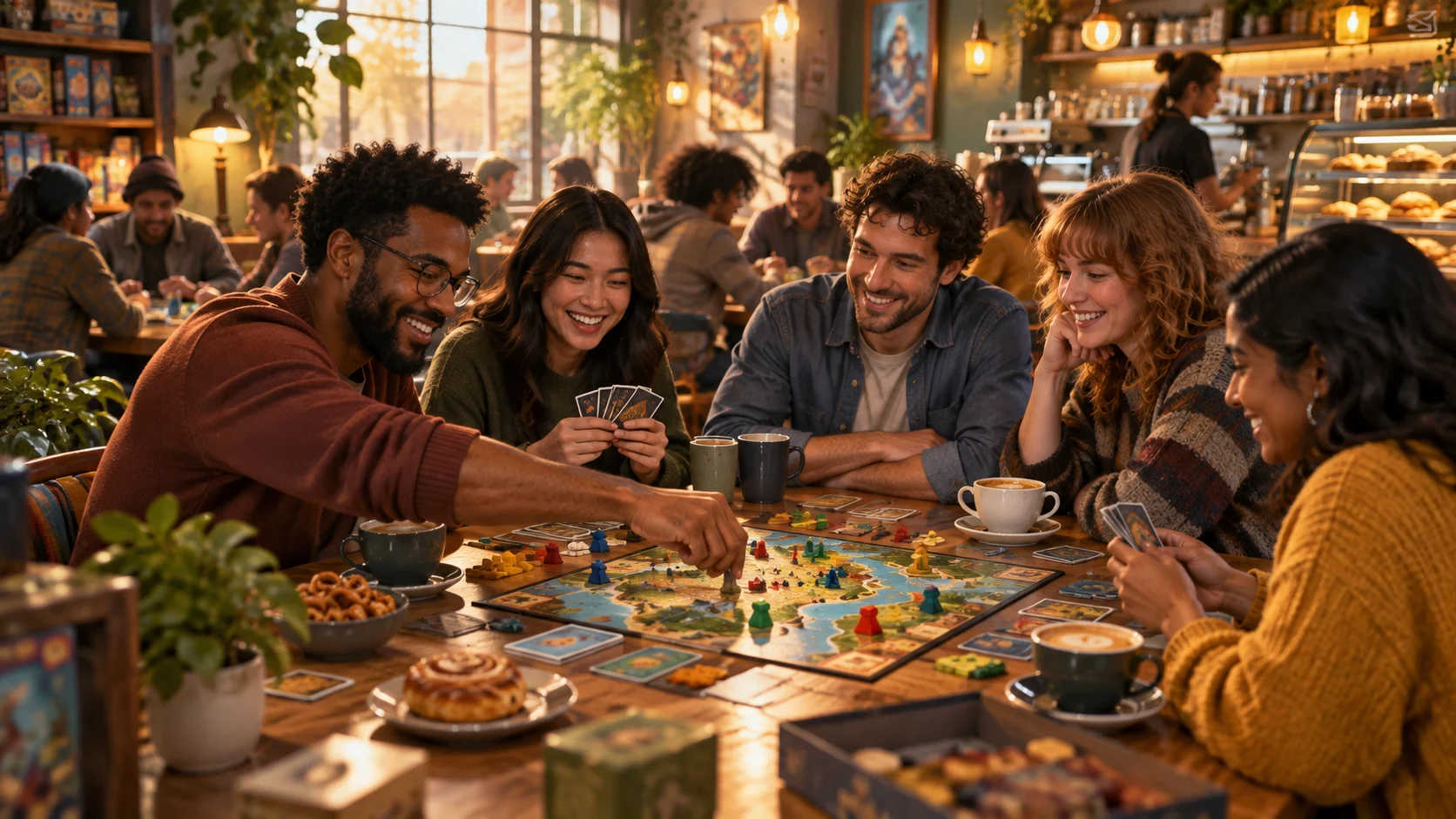
Public clubs need searchable location and welcome language. These names make it clear that new players, drop-ins, teaching, and community play belong at the table.
- The Community Game Table
- The Local Meeple Meetup
- The Café Game Circle
- The Open Table Society
- The Neighborhood Board Gamers
- The Public Play Club
- The Drop-In Game Night
- The Community Center Players
- The Library Game Table
- The New Player Welcome
- The City Tabletop Club
- The Weekend Meetup
- The Learn-to-Play League
- The Friendly Local Gamers
- The Shared Shelf Society
Choose broad or game-specific
A group that changes games every session benefits from board, tabletop, game night, turn, meeple, dice, cards, shelf, or table language. A one-game club can use a specific mechanic or theme, subject to trademark and community rules.
I would keep the permanent group name broad and use individual event titles for featured games. That structure survives changing tastes without asking the members to rebrand because somebody discovered train games.
Board game and tabletop are not identical
Board games are part of the larger tabletop category, which can also include role-playing games, miniature games, trading card games, and other activities. A mixed club may prefer tabletop, while a board-game-only group can be more specific.
Public descriptions should state what is usually played. A broad name attracts attention, but a plain sentence prevents somebody from bringing an army of miniatures to a two-player abstract-game night.
Use mechanic words carefully
Worker placement, deck building, drafting, area control, trick taking, roll-and-write, and engine building describe different systems. Use a mechanic in the name only when it appears regularly at the table.
Meeple began as a particular coined term and is now widely used informally for person-shaped game pieces, but individual product names and art remain protected. Do not imply affiliation with a publisher.
Make the group welcoming
A public club should state the venue, schedule, typical game length, age policy, accessibility, cost, food rules, and whether teaching is available. New players should not have to decode those details from the name.
Avoid titles that shame casual players, children, people who need rules repeated, or members who prefer shorter games. Difficulty preference is not a moral ranking.
Agree on table culture
Set expectations about phones, food near components, take-backs, rules lookups, teaching, time limits, and quarterbacking in cooperative games. The friendly name should be matched by friendly behavior.
Quarterbacking describes one player directing other people's decisions in a cooperative game. Some groups welcome strategic advice, while others need explicit space for each player to choose.
Handle copyrighted game titles thoughtfully
A private fan group may refer descriptively to the game it plays, but a public club, business, or merchandise should avoid implying official affiliation. Publisher names, logos, characters, and distinctive product identities may be protected.
An original group name is more flexible when the club changes games. Put specific titles on the event calendar instead of the permanent banner.
How I would choose the final name
Select six choices that match the group's breadth and tone, then ask each member to pick two privately. Keep the names with shared support and test them in an invitation.
“Join the Open Table Society on Friday” tells a newcomer more than a deep joke about one expansion. Cleverness should help the invitation, not hide it behind a secret objective.
Try it with different games
Read the finalist beside a cooperative game, party game, strategy game, card game, and family game. If it sounds natural across the group's real range, it can last.
Search public-facing names before creating a website, meetup, merchandise, or café brand. No list can promise name availability or trademark clearance.
Questions people ask about board game group names
What makes a good board game group name?
A good name matches the group's play style, is easy to say, and remains useful when the game changes. Public clubs should also be easy to find by location and activity.
The Game Table is broad, while The Engine Builders clearly signals heavier strategy. Choose the honest description.
What is a funny board game name?
The Rulebook Lawyers, The Box Will Never Close, The Snack Phase, and The Last Round Allegedly use familiar table moments. The humor includes the group rather than criticizing one player.
Our crazy group names can provide more playful structures. Add a turn, component, rule, setup, or scoring detail.
Should a family game night have a permanent name?
It can, especially when the gathering happens regularly or has a shared score sheet. A stable name can turn an ordinary evening into a tradition.
Our family group names may help with broader household language. Let children contribute finalists within age-appropriate options.
How do public meetups attract beginners?
Use words such as open table, learn to play, friendly, community, or new player welcome. Then state teaching plans, start time, player capacity, and registration requirements clearly.
The team group chat names can help with a private organizer thread. Keep public event information in the venue's official listing.
Can the group use a famous board game in its name?
A private fan group can identify what it plays, but a public or commercial name should not imply endorsement or ownership. Check organizer, platform, publisher, and trademark requirements.
An original umbrella name gives the group room to host many games. Specific titles can appear descriptively on individual event pages.
How do we break a tie?
Choose the name that fits the widest realistic range of games and is easiest for a new member to remember. If both pass, play a short agreed game to decide only if nobody minds adding one more round.
Then label the chat, schedule the night, and put the missing piece somewhere safe. Future you will still not remember where that is.

Ellie is the founder and editor of Fun Group Names, where she curates creative, inclusive lists of group names, team names, and group chat names grounded in real-world trends and pop-culture research. Her guides are trademark-aware and family-friendly so you can choose the perfect name with confidence.